Student Portraits
Our community of doctoral students is what makes MaP Doctoral School a special place. Catch a glimpse at our students' diverse research backgrounds, their commitment to MaP, and their aspirations.
2026
“I’m a research-based artist and art-focused researcher”

Andrea Ling is a fifth-year doctoral student Prof. Benjamin Dillenburger’s Digital Building Technologies group at the Department of Architecture (D-ARCH).
My research
My work focuses on living materials and their biological functionality, with the long-term goal of integrating them into architecture at scale. I began working at the intersection of biology, fabrication and design at the MIT Media Lab, after earlier studies in science and architecture in Canada and professional practice as an architect and installation artist. Since then, I have explored engineered decay using enzymes, fungi and bacteria, including work with Ginkgo Bioworks and large-scale installations. At ETH, together with colleagues from D-MAVT, D-ARCH and international collaborators, I worked on cyanobacteria-based systems and microbially induced biomineralisation. We developed a robotic biofabrication platform to 3D print living structures inspired by ancient stromatolites, aiming to capture CO2. Geometry and structural redundancy turned out to be more important than material strength, allowing even fragile materials to form stable architectures. The highlight of my doctorate at ETH was participating in the Venice Biennale, as the national representative for Canada. I led the Living Room Collective, which realised a 7-month exhibition for the Canada Pavilion exploring the potential for collaboration between humans and nature. Our installation, Picoplanktonics, consisted of large-scale 3D-printed living lattices housing live cyanobacteria capable of carbon sequestration.
My MaP moment
I was the first biodesigner hosted by the Institute of Technology in Architecture (ITA). My doctoral advisors are Benjamin Dillenburger and Mark Tibbitt. Although I am not an ALIVE fellow, I helped establish the ALIVE labs with the other fellows and benefited greatly from access to the facilities and from the interdisciplinary CLiMa community, that allowed my project to reach the scale it did. These environments brought together biologists, material scientists, engineers and architects, which was essential for my work. I’m very thankful that the MaP ecosystem can support such research by enabling collaborations and shared resources across departments.
My future
I see my future primarily in academia, possibly as a research scientist or professor, although I remain open to other paths. A startup focused on CO2 drawdown using my research could also emerge, perhaps led by future students. My experience in conventional architectural practice showed me that my strengths lie in research rather than economically driven production. Art remains integral to how I work. I move fluidly between being a research-based artist and an artistically-focused researcher, and I expect this hybridity to continue shaping my career.
(This portrait was first published on LinkedIn on 20 April 2026.)
“We control disorder"

Benjamin Fahl is a second-year doctoral student in the Disordered Materials Group led by Prof. Arkadiy Simonov at the Department of Materials (D-MATL). Before joining ETH Zurich, he completed his Bachelor’s and Master’s degrees in Chemistry at RWTH Aachen University in Germany.
My research
In my work I explore how atomic disorder shapes the behaviour of functional materials. Atoms may substitute one another, shift from their ideal sites or respond to size mismatches. These effects strongly influence material properties. I focus on displacive disorder, where atoms are slightly shifted from their ideal positions in the crystal, a subtle effect that can reveal why materials behave in unexpected ways. These shifts are closely connected to phonons, the vibrational waves that travel through a crystal much like sound waves. Phonons steer heat transport, heat capacity and even phenomena such as superconductivity.
I model phonons and analyse thermal diffuse scattering using synchrotron X-ray data to understand how atomic vibrations deviate from harmonic motion. In scandium fluoride, this helps me understand why the material shrinks when heated. I also study magnetite, where phonons interact with polarons that arise from charge separation in the lattice. Their interplay drives magnetite’s abrupt metal–insulator transition, which is technologically relevant. By adjusting crystal growth conditions or adding dopants, we can deliberately tune such disorder. For me, the challenge is not to eliminate disorder but to control it.
My MaP moment
At the MaP Graduate Symposium 2025 I contributed a poster. I appreciated being exposed to research beyond my own area and enjoyed the discussions that came out of it. I have also taken the MaP Doctoral School’s Ethics course and joined the 2024 onboarding event. Since my research group is small, I value MaP as a broader community that connects me to other researchers. The work of the MaP Doctoral School is important for creating that network.
My future
After my doctorate, I would like to continue with a postdoctoral position. There are research groups in Switzerland and beyond whose work aligns with my interests. I want to continue doing research and can see myself staying in academia. I am grateful for the strong support of my PI and look forward to deepening my expertise further.
(This portrait was first published on LinkedIn on 30 March 2026.)
“The MaP Graduate Symposium has accompanied me throughout my time at ETH"

Ayça Şenol Güngör is in the 5th year of her doctorate in Prof. Vanessa Wood’s Materials and Device Engineering group at ETH Zurich, Department of Information Technology and Electrical Engineering. Previously, she completed her Master’s at ETH Zurich, and her Bachelor’s at Sabanci University in Istanbul, both in Materials Science.
My research
I work on lithium-sulfur batteries. As demand for advanced energy storage grows, they are gaining attention as a promising alternative to conventional lithium-ion systems. Our focus is on the cathode side, where we investigate the conversion mechanisms and the parameters that currently limit performance. By varying the properties, I study how different parameters influence efficiency and life span of batteries. I spend much of my time in the lab making cathodes and assembling batteries. I also perform electrochemical tests and materials characterization, including scattering measurements and electron microscopy. Our work has delivered fundamental insights that translate into practical guidelines for industry. These can help battery and cathode producers improve conversion efficiency and unlock more of the technology’s theoretical capacity. With applications ranging from electric aviation (e.g., drones) to electric vehicles and consumer electronics, my research connects fundamental science with real world impact.
My MaP moment
The MaP Graduate Symposium has accompanied me throughout my time at ETH. At first, I attended as a listener and was inspired by the talks and posters. Later, I presented my own poster and twice joined the organising committee. Being selected to give a talk at the 20th edition in 2025 was a real highlight for me.
More recently, the MaP Lab Surprise Lottery paired me with a researcher working on the anode side of batteries. Exchanging perspectives across disciplines was both intellectually and personally rewarding. My surprise lab partner has started her doctorate recently. The exchange brought back some of the excitement and motivation of my early doctoral years and led to fresh perspectives and ideas.
My future
I plan to graduate in 2026. While I began my doctorate with the goal of pursuing an academic career, I am now equally drawn to industry research, where I can see ideas progress from fundamental research to real-world applications. I want to work at the interface of science and technology, improving the efficiency of energy storage systems and the sustainability of energy materials. Location is secondary to the role, although Switzerland feels like home after living here for more than seven years. For now, my focus is on finishing strong and sharing my work, including an upcoming paper and a conference talk.
(This portrait was first published on LinkedIn on 27 January 2026.)
2025
“I tend to uncover the theories behind an application"

Dimitrios Sapalidis is a second-year doctoral student in Prof. Elsa Abreu’s Quantum Materials Dynamics Group at the Department of Physics (D-PHYS), ETH Zurich. He currently serves as student representative of the MaP Doctoral School.
My research
I work in the field of ultrafast optics, particularly terahertz (THz) spectroscopy, to probe and control quantum materials. These materials are systems with strongly correlated electrons, where collective interactions give rise to emergent quantum phases that can be manipulated by light. They may one day be used for high-performance electronic and quantum devices. My group and I investigate phase transitions and the underlying interactions among (quasi-)particles, including electrons, phonons, and magnons.
My research in particular focuses on charge-density-wave and multiferroic materials, aiming to uncover exotic non-equilibrium and hidden phases. These arise when systems are driven out of equilibrium by ultrafast optical excitation or external stimuli such as pressure or electric bias. The ultimate goal is to learn how external changes can actively adjust the electronic properties and the interactions between charge, lattice, and spin. This understanding will make it possible to control phase transitions in correlated materials.
Before starting my doctorate at ETH Zurich, I worked at Empa and at Aristotle University of Thessaloniki on the optical and structural characterisation of nanomaterials. There, I discovered a real passion for materials science and for understanding how structure shape material behaviour and vice versa. This ultimately led me to pursue a doctorate on strongly correlated materials. In June, I reached my first major milestone by passing my research colloquium.
My MaP moment
At the MaP Graduate Symposium 2025, I was elected MaP student representative. I hope to launch initiatives such as a conference or summer school on optical probing of nanomaterials. Science communication is particularly important to me. Too often, fundamental research is undervalued because it isn’t communicated effectively. Recognizing this is the first step toward bridging science and society. I also want to encourage more exchange beyond my department and foster connections across disciplines.
My future
I keep an open mind about the future. Seeing research translated into real devices, for example in quantum technologies, inspires me. I could imagine contributing to such developments in academia, industry or even a start-up. At the same time, my strength lies in uncovering the theories that underpin applications. Therefore, I see myself less as the person building the device and more as the one explaining the science that makes it possible.
(This portrait was first published on LinkedIn on 27 October 2025.)
“Improvements may give someone back their independence”

Alessio Amicone is a 4th-year doctoral student in Prof. Stephen Ferguson’s Laboratory for Orthopaedic Technology at the Institute for Biomechanics (D-HEST).
My research
I investigate how articular cartilage fails under friction and load, with the goal of designing strategies to restore joint function in patients with osteoarthritis. A central part of my work is the use of melt electrowriting (MEW*) to fabricate scaffolds that replicate the complex architecture and function of cartilage. My projects combine experimental work, fracture analysis, tribology, mechanical testing, and advanced fabrication techniques with finite element modelling to predict scaffold performance before clinical translation.
We’ve made particular progress in understanding failure mechanisms and in mimicking joint function accurately. While direct patient application remains on the horizon, each step forward brings us closer to effective treatments. That prospect – improving someone’s quality of life – is what drives me.
My MaP moment
I became involved with the MaP Doctoral School through its events and emails. My first contact was attending a Mechanobiology Seminar to support a colleague, followed by the Distinguished Lecture Series Engineering with Living Materials. I value MaP for its diversity – the way different disciplines meet and collaborate. In my field, where success depends on combining perspectives, these connections are essential, and I believe in contributing as much as benefiting. That’s why I presented my research on 16 October 2025 as part of the MaP Mechanobiology Seminar 2025/26.
My future
During my doctorate, I had the privilege of traveling and spending extended periods in the UK and the Netherlands. These were experiences that broadened my skills, expanded my professional network, and left me with friendships that will last a lifetime. Although I am Italian, I value living and working in Switzerland. Here, I see a uniquely strong connection between research, industry, and healthcare. This enables innovation to move more rapidly toward clinical impact. My aspiration is to remain part of this environment, whether in academia, applied science, or industry. Ideally, I would like to work closer at the intersection of research and clinical practice, bridging innovation and patient care. Seeing my work translate into real improvements in people’s lives would be the greatest reward. For me, every advance in the lab is not only a technical success but a chance to give someone back their independence.
* MEW is an additive manufacturing method that merges electrospinning and fused deposition modelling to produce intricate, highly precise, multi-scale structures from molten polymers. At the Institute for Biomechanics, there are currently three MEW machines, making it a unique environment to explore this technology. If you are a researcher interested in using them, please feel free to contact Alessio Amicone or anyone at the Laboratory for Orthopaedic Technology.
(This portrait was first published on LinkedIn on 13 October 2025.)
“My professor has taught me how to motivate myself.”

Hekun Kuang is a third-year doctoral student in Prof. Markus Niederberger’s Laboratory for Multifunctional Materials at the Department of Materials (D-MATL).
My research
I work on stretchable batteries designed to power the next generation of healthcare wearables. In my project, I embed the active components of zinc-ion batteries into hydrogels. Hydrogels are highly flexible, making them ideal for devices worn on the human body. Zinc-ion batteries, compared to the more common lithium-ion ones, are much safer since they are less prone to fire risks and other hazards—an important advantage for wearable applications. Because this research is highly application-oriented, our group collaborates closely with industry partners.
I studied Materials Engineering for my bachelor’s degree, focusing on the performance and design of materials. I then completed a master’s in Materials Science at ETH Zürich, where the emphasis lies on understanding the mechanisms of materials. This cross-disciplinary training has brought me to my current work. I’m motivated by the chance to make new discoveries at the intersection of Materials Engineering and Materials Science.
My MaP moment
My first contact with MaP came through the courses on ethics and scientific writing, which I found very informative. But my biggest involvement has been as part of the organising committee for the MaP Graduate Symposium 2025. Having attended the event before, I wanted to experience what it takes to organise it myself. Together with my fellow committee members Ines Kraiem and Johanna Byloff, I introduced a new poster prize quiz to boost engagement. I quickly realised just how many aspects need to be considered when preparing an event of this scale. The symposium presentations stood out to me, as they showed the progress of fellow doctoral students. For many, this event is a great opportunity to present their work. At international conferences, speaking slots are difficult to secure at the doctoral level. Even presenting a poster provides a valuable platform for exchange. I believe MaP could offer even more such opportunities to share research.
My future
I see my future in industry, where I can influence outcomes more directly than in academia. Founding or joining a startup is one option, as is R&D in a larger company. For now, I am keeping different paths open. During my doctorate, I have learned the importance of self-interest and self-motivation. My professor has always encouraged us to follow our own ideas. This helped me develop the drive to pursue research independently. It has been one of the most valuable lessons of my doctoral studies.
(This portrait was first published on LinkedIn on 30 September 2025.)
“No syringes, no blood, no waste – our suction cup is now biodegradable.”

Hanna Krupke is a third-year doctoral student in Prof. Jean-Christophe Leroux’s Laboratory for Drug Formulation and Delivery at the Department of Chemistry and Applied Biosciences (D-CHAB).
My research
I completed my Bachelor’s degree in Pharmaceutical Sciences at the University of Basel, before moving to ETH Zurich for my Master’s. For my Master’s thesis, I joined the group where I am now pursuing my doctorate. My research focuses on peptide delivery. Most peptides cannot be taken in pill form, and many people are afraid of needles. This is why our group developed a small suction cup that attaches to the inside of the cheek. It releases peptides over 10 to 20 minutes before being removed.
The project already existed when I joined, and even led to a start-up. My contribution is to make the cups biodegradable and more sustainable. The challenge was to find polymers that are not only degradable but also elastic, similar to silicone. We now use a scalable method called thermal crosslinking. We 3D print moulds and fill them with a viscous polymer mix and a thermal initiator, a substance that starts the reaction when heated. We then warm the mixture and form the final cup.
Working on something so applied made it easier to enter the unfamiliar field of materials science. I wanted a project outside my comfort zone, and this allowed me to learn new methods while applying my knowledge of formulation science. I also value the interdisciplinary spirit of our group, where colleagues bring very diverse backgrounds.
My MaP moment
A highlight was the MaP Graduate Symposium 2025. I was selected to give a talk, which was both overwhelming and exciting given the large audience. The atmosphere was supportive though. I especially enjoyed the graphic recording of my talk by illustrator André Sandmann, which I now use in presentations. The variety of topics and the interactive discussions made it the best symposium I have attended so far.
My future
In the mid-term, I would of course like to complete my doctorate. While I find academia very interesting, I see myself working in a more industrial setting. I am keen to put my interdisciplinary mindset into practice. I also greatly enjoy teaching, so taking on a role as a lecturer would be an excellent opportunity for me.
(This portrait was first published on LinkedIn on 16 September 2025.)
“I combine corrosion science and structural engineering—in lab and on site—to improve service life modelling."

Deniz Yilmaz is a doctoral student in the Durability of Engineering Materials Lab at ETH Zurich at D-BAUG led by Prof. Ueli Angst. He is currently completing his doctorate, with plans to graduate in 2025.
My research
I first completed a BA degree in Chinese Studies before switching to Civil Engineering. After earning both my BSc and MSc degrees at ETH Zürich, I joined Prof. Angst’s group—first for my Master’s thesis and later as a doctoral student. The applied focus of the proposed research project and the supportive team atmosphere made it an easy decision.
My work focuses on chloride-induced corrosion in reinforced concrete. This is a key issue for structures like bridges, where corrosion can develop unnoticed but affect long-term safety. I collect data from real engineering structures undergoing renovation—looking at the shape of corrosion pits in steel reinforcement, since their size, shape and distribution influence the structural performance.
I also perform experiments to examine how factors like different exposure conditions and cracks influence corrosion onset and propagation. This data helps improve service life models, which estimate how long a structure can securely remain in use. My research is experimental rather than simulation-based, rooted in measurements and observations from the field and lab.
While my results aren’t yet ready for direct use in engineering practice, they help fill important gaps and provide a foundation for future work. I find it especially satisfying when the outcome of an experiment matches my expectations. In those moments, writing about the results becomes a rewarding part of the process. I also enjoy the variety—combining lab work and site visits, and evaluating my findings to improve service life modelling.
My MaP moment
I once attended a MaP Minds & Munchies lunch event after recognising one of the speakers from D-BAUG. Although I had to leave before the informal part, the event offered a valuable glimpse into work outside my own field. I also took part in the MaP Material Strength & Durability Symposium. My main collaboration is with specialists in concrete structures and bridge design through the ASTRA project, which also funds my research. Within our own team, regular guest talks and internal exchanges have provided plenty of opportunities for discussion and input.
My future
After completing my doctorate, I plan to work in an engineering office with a focus on structural preservation. I’d be happy to stay involved in research or support students, but I don’t see myself pursuing an academic career or starting my own business—at least not yet.
(This portrait was first published on LinkedIn on 22 August 2025.)
“From food science to the physics of fungi”
Ciatta Wobill has just completed her doctorate in Prof. Peter Fischer’s Food Process Engineering group at the Department of Health Sciences and Technology (D-HEST).
My research
I worked with mycelium, the root-like structure of fungi. The original aim was to develop a meat alternative using solid-state fermentation to mimic the fibrous texture of meat. That meant identifying a soft, edible material the fungus could grow into—something that would support and shape its development.
We experimented with different fungal species and substrates, but the focus soon shifted from food products to exploring how material properties affect fungal growth. What happens when the host material is softer or stiffer? How can we design it to guide the fungus? And how do we measure these changes? These questions led us into material physics and rheology.
To tackle them, I even worked with wood-based materials—food substrates proved too complex to isolate specific influencing factors. Mycelium reacts to everything, so the more controlled the host, the clearer the insights. Over time, my work became less about food and more about the mechanics of living materials. We tried so many things—many didn’t work, but each ‘failure’ helped shape the next step. In the end, my thesis brought together three papers (one published, one accepted, one under review), plus an additional chapter.
My MaP moment
At first, I felt a bit on my own. Working with fungi was new for our group, and everything about my project was unfamiliar. But I was drawn to how broad the topic became, bridging food science, material science, and microbiology. That interdisciplinary aspect led to valuable collaborations with the Department of Materials (D-MATL). Through MaP, I joined the ALIVE initiative’s CliMa group as a partner, which connected me with others at ETH working on mycelium and living materials. These exchanges—especially with Julie Laurent (Complex Materials), Robert Kindler and Sophie Koch (Wood Materials)—greatly enriched my research. They reminded me how important it is to get input from beyond your own lab bubble.
My future
Having completed a Bachelor's in food science, a Master's in food process engineering, and most recently a doctorate, I’ve spent close to ten years at ETH. Over time, my focus expanded beyond food to encompass material science, reflecting the interdisciplinary nature of my work. I’m now ready to take the next step and explore opportunities beyond academia—ideally in industrial research within the food sector, pharmaceuticals, or materials. I remain open and curious, and I’m excited to see where this next phase of discovery and growth will take me.
Looking ahead, I hope to lead my own interdisciplinary lab, where I can contribute to technologies that have a tangible impact on people’s lives. Whether in academia, industry, or entrepreneurship, my focus will remain on creating robotic and assistive systems that function effectively in the real world.
(This article was published on 23 May 2025 on LinkedIn)
“Beyond technological advancements, I want my research to have a tangible impact on people’s lives.”
Daniela Macari is a fourth-year doctoral fellow of the Max Planck ETH Center for Learning Systems. She is co-advised by Prof. Stelian Coros in the Computational Robotics Lab at ETH Zurich’s Department of Computer Science and Prof. Christoph Keplinger at the Max Planck Institute for Intelligent Systems in Stuttgart.
My research
I specialise in the development of ultra-strong artificial muscles inspired by biological ones. These muscles, known as soft actuators, are made from polymers and insulating fluids and respond to electric fields by changing shape and generating force.
My work combines materials science, robotics, physics, and polymer chemistry, building on my background in mechanical engineering – specifically in high-performance, high-efficiency driving systems.
Traditional robots, made of rigid components, perform exceptionally well in highly controlled environments but struggle in dynamic, real-world situations. In contrast, nature has designed systems that seamlessly blend rigidity and softness, enabling adaptive and efficient movement. To bridge this gap, I work with composite ferroelectric polymers that exhibit excellent electromechanical properties. By fine-tuning their electrical and mechanical behaviour, I aim to create artificial muscles that are not only incredibly strong but also lightweight, soft, and adaptable to changing environments. This research has promising applications in robotics, prosthetic devices, and assistive technologies.
My MaP moment
Working in materials science in a computational robotics lab is both enriching and intellectually stimulating, but at times, it can feel isolating. The MaP community at ETH Zurich helps me stay connected with fellow materials researchers.
A standout moment for me was attending the MaP Improvate BBQ, an innovation workshop led by improv theatre professionals, which reshaped my approach to problem-solving and collaboration. Additionally, serving on the MaP Graduate Symposium 2024 organising committee provided an invaluable opportunity to foster interdisciplinary connections.
Together, these experiences reinforced the crucial role that an inclusive community plays in research and innovation.
My future
I am passionate about pushing the boundaries of intelligent materials in robotics and healthcare. In the near future, I aim to develop artificial muscles that are stronger, more efficient, and more adaptable—systems that mimic nature yet surpass its limitations.
Looking ahead, I hope to lead my own interdisciplinary lab, where I can contribute to technologies that have a tangible impact on people’s lives. Whether in academia, industry, or entrepreneurship, my focus will remain on creating robotic and assistive systems that function effectively in the real world.
(This article was published on 30 April 2025 on LinkedIn)
“Quantum computing is at a turning point”

Dominic Hagmann is a doctoral student in Prof. Andreas Wallraff’s Quantum Device Lab at the Department of Physics (D-PHYS), ETH Zurich. He has just passed his aptitude colloquium, which takes place within twelve months after joining the doctorate programme.
My research
In our research group, we build quantum computers using superconducting qubits (transmons). Unlike classical bits, qubits can exist in a superposition of states, enabling more efficient computations for certain problems.
A key challenge is reducing errors in these delicate systems. My research focuses on making qubits more stable by studying the loss mechanisms of superconducting qubits and improving the limiting aspects. These losses often occur at oxidised material interfaces. To address this, I vary the fabrication techniques and experiment with a range of superconducting materials like Niobium, Tantalum or Aluminium. My work involves micro- and nanofabrication in a cleanroom environment.
Quantum computing is at a turning point, moving from academia to industry. Small-scale demonstrations work, but complex computations on many qubits are still not possible. Scaling up to millions of qubits is extremely challenging and requires a collaborative effort. In our group of around 30 researchers, including 17 doctoral students, we are working to develop larger and more reliable quantum computers.
I studied electrical engineering (BSc) and quantum engineering (MSc) at ETH. Micro- and nanofabrication, as well as solid-state physics, have always fascinated me. Doing a doctorate allows me to pursue my passion for research.
My MaP moment
So far, I haven’t attended any Competence Center for Materials and Processes (MaP) events. But now that we’re having this conversation, I’ll take a closer look at the courses and events on offer—who knows, maybe I’ll even present my research at the MaP Graduate Symposium on 19 June 2025!
My future
I see my future more in industry—whether in a large company or a startup—rather than academia. As long as my work involves micro- and nanotechnology, I’ll be in the right place. At 29, I’m a bit older for a doctoral student, partly because I took time to engage in student projects like AMZ Racing, an internship and also an exchange programme during high school. Long term, I see myself staying in Switzerland, despite—or perhaps because of—having spent significant time studying abroad.
(This article was published on 31 March 2025 on LinkedIn)
“I’m a materials scientist evolving in electrical engineering”

Virginie de Mestral is a third-year doctoral student in Prof. Mathieu Luisier’s Computational Nanoelectronics Group at the Integrated Systems Laboratory, ETH Zurich at D-ITET. She is the president of vmitet, the Association of the Scientific Staff at the Department of Information Technology and Electrical Engineering.
My research
I use computational science to tackle materials-related challenges. My work focuses on optimising crystals that convert electrical signals into optical signals, which is essential to connect computers to the optical fiber network. By improving this conversion process, we can reduce power consumption and decrease the device’s footprint. I love the intuitive nature of simulations—they require distilling complex physics down to the essentials. It's all about understanding what truly matters and simplifying the rest. When experimentalists reach a limit, simulations can offer the qualitative insights needed to move forward. For me, simulation is a tool for developing intuition and exploring the unseen.
I’ve recently completed my first research project and am now diving into a new challenge. This stage is both exciting and demanding, as I work to define the problem's boundaries, identify existing tools, and determine what’s truly needed to solve it. The possibilities feel limitless at this point. Hopefully, the solution I find will have a practical application.
My MaP moment
I earned my BSc and MSc in Materials Science at EPFL. A master’s thesis in atomistic simulations led me to Prof. Mathieu Luisier’s group at ETH Zürich. Our team focuses on atomistic- and nano-scale device simulations, collaborating with experts within and beyond ETH. My main scientific community is NCCR-MARVEL, which connects me to my former supervisor Prof. Nicola Marzari from EPFL. However, MaP helps me stay close to my materials science roots. I’ve presented at the MaP Graduate Symposium 2024 and found it rewarding to engage with researchers from diverse fields. As scientists, we need to see beyond our specialisations. Presenting to a broad audience is a challenging but valuable exercise.
My future
While my future path is still taking shape, I’m certain about my passion for connecting people and fostering collaboration between scientists and entrepreneurs. I’m developing the ability to provide structure, understand others' expectations, and welcome anyone to ask questions. Sharing knowledge through teaching is also deeply fulfilling, and I believe education will play a vital role in the age of AI. Whether in academia or industry, my aim is to pursue work that reflects my personal values.
(This article was published on 17 February 2025 on LinkedIn)
2024
“People usually have negative associations with bacteria, but mine are so cute!”
Yifan Cui is a third-year doctoral student in Prof. Mark Tibbitt’s Macromolecular Engineering Laboratory at D-MAVT and a fellow of the ETH ALIVE Advanced Engineering with Living Materials initiative. She is also MaP student representative 2024/25.
My research
I embed bacteria within a 3D printed hydrogel network to create a new, “living” material, which sequesters and stores CO₂ from the air. The bacteria I use are among the first photosynthetic organisms on Earth, dating back roughly 3 billion years. All they need to thrive is sunlight and (sea) water. People often associate bacteria with disease, which is why I call mine by their full scientific name. Cyanobacteria— after their distinct cyan-blue colour—has a nice ring to it. I find these bacteria fascinating and very cute. They are so fat!
Though my research is still in its early stages, it has real-world potential. Professor Mark Tibbitt is optimistic that our work could one day have a real impact. Such living materials could for example be applied to rooftops or as a coating on various surfaces. A major challenge we face is the high cost of hydrogels, but I’m working on a potential solution by introducing a second bacterial species that can produce its own hydrogel (i.e. an extracellular matrix—essentially a jelly-like, sticky substance). I obtained this strain from Karen Antorveza, a contact I made through the ALIVE network.
My MaP moment
Being part of ALIVE, which was initiated by MaP, has allowed me to connect from the start with researchers from other disciplines. Collaboration leads to rewarding results. Therefore, I volunteered for the 2023 MaP Graduate Symposium, helping to design marketing materials and judging in the poster competition. This year, as the MaP student representative, I advised MaP on their onboarding event to make it more appealing to new students. After some discussion, we decided on customised lab books as giveaways. The event, held on 12 November, attracted a great deal of interest!
My future
One of my dreams is to open a bakery with a friend—not as a primary career, but as a passion project. In the meantime, my main goal is to stay in academia and continue researching happily. As a first step, I’ll hopefully become Dr Cui and then find a postdoctoral position somewhere. I don’t really envision myself entering industry or becoming an entrepreneur for now, but never say never!
About ALIVE: https://map.ethz.ch/research/alive.html
(This article was published on 19 December 2024 on LinkedIn)
“Communicating science is as important as the research itself”
Ipek Efe is a fourth-year doctoral student in Prof. Morgan Trassin’s team at the Laboratory for Multifunctional Ferroic Materials. She is a former president of SAM – Scientific Staff Association at the Department of Materials.
My research
I focus on ferroelectric materials. Due to their crystal structure, they naturally separate and store positive and negative charges on their opposite ends. These materials complement and may even replace semiconductors in future electronic devices as they are more energy-efficient and can provide higher information storage density. Now, however, their potential is still limited by issues like decreasing stability (so-called “fatigue”) after repeated use or lack of control of their properties.
Currently, I’m working on a thin film material that combines different ferroelectric compounds in one structure—think of it as a composite material but with constituents as thin as several atomic layers. The resulting new material shows new macroscopic properties while still preserving the functionalities of the parent compounds. Thanks to these new properties, we are now one step closer to the development of fatigue-free ferroelectric devices. Our paper on this project is under review and will hopefully be published soon.
My MaP moment
A defining moment for me at MaP was giving a talk at the 2023 MaP Graduate Symposium. I had spoken at conferences before, but this talk was different—there was a larger, more diverse audience, and I had only 10 minutes to present my work to an audience outside my field. It was a challenge, but it taught me how to simplify complex ideas for a broader audience.
After my talk, I was approached by several fellow students, and I realised that my research had more in common with work in other departments than I had thought. This experience reinforced my belief that communicating science is as important as doing the research itself. It’s crucial to make scientific advancements accessible to the public so that, when innovations reach society, they’re understood and accepted.
My future
I’m passionate about materials science because it bridges engineering and natural sciences across different scales—from nano to macro. I love the intellectual challenge of academia and the sense of discovery that comes with it. I also like teaching, as I see it as a way to inspire and mentor the next generation of scientists. My goal is to continue in academia. I’m particularly interested in doing a postdoc in the US after completing my doctorate at ETH Zurich, where I’ve also earned my Master’s. In the midterm, I see myself working in Europe or my native Turkey though.
(This article was published on 28 November 2024 on LinkedIn)
“We work with dirt, not with advanced materials.”
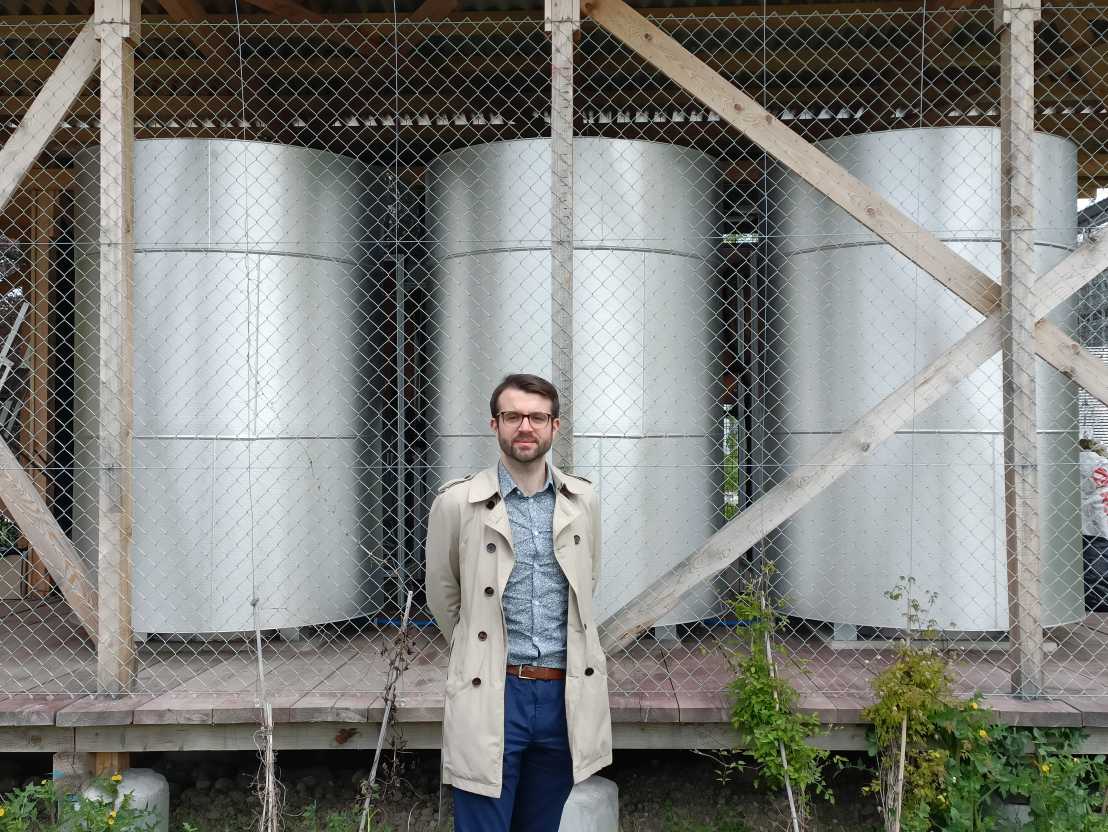
Samuel Heiniger is a second-year doctoral student in Prof. Wendelin Stark’s Functional Materials Laboratory at D-CHAB. He works on a solution to chemically store solar energy for the winter months when electricity is scarce.
My research
Together with my group, I investigate novel processes for decentralized seasonal energy storage, particularly the steam iron process. It enables to safely handle hydrogen in the form of iron powder. The goal is to shift local surplus electricity from summer to deficit hours in winter to provide a year-round supply of renewable electricity at a low cost.
I established a test facility in front of the HCP building at ETH Hönggerberg, designed to supply energy to about four households. The facility features tanks containing iron ore, an inexpensive, sustainable and safe material. By introducing (non-pressurized) hydrogen into the tanks, we produce iron powder, providing a secure means of hydrogen storage. When needed, the stored hydrogen can be reclaimed by introducing steam.
The primary challenges of the project were not technological but practical issues, such as preventing pipes from freezing during winter. Our next step is to scale up the facility to serve approximately a hundred households. As we will need millions of tons of iron ore (aka dirt) for this, we must be pragmatic and focus on techno-economic feasibility, available materials, and real-time performance.
My MaP moment
The first year of my doctorate was hard. I had to cope with the fact that I had to work on my own. By now, I’m used to it and wouldn’t want it any other way. My goal is not perfection, but to find solutions that work. Failing is part of this process. We work with dirt, not with advanced materials. Even though I signed up for MaP Doctoral School, I haven’t taken part in any events yet. Now that I know that MaP is not just about new materials, maybe I’ll try out one of their workshops in ethics or science communication.
My future
I would like to continue working in the field of energy storage. Isn’t it the point of a doctorate to continue using the knowledge you gained? To me, it’s a privilege to have a project that works and that is relevant to society. Now that the proof of concept on a small scale is here, I want to put it into practice in real life. My goal is to solve real-world problems. I guess this means that the academic track is not necessarily for me. I very much like entrepreneurship and doing real things.
(This article was published on 7 May 2024 on LinkedIn)
“I want to understand the various languages of mycelium”
Judith Gómez Cuyàs is a first-year doctoral student in Prof. Ralph Spolenak’s ETH Laboratory for Nanometallurgy at D-MATL. She is an ETH ALIVE fellow and part of the ALIVE CLiMa work stream.
My research
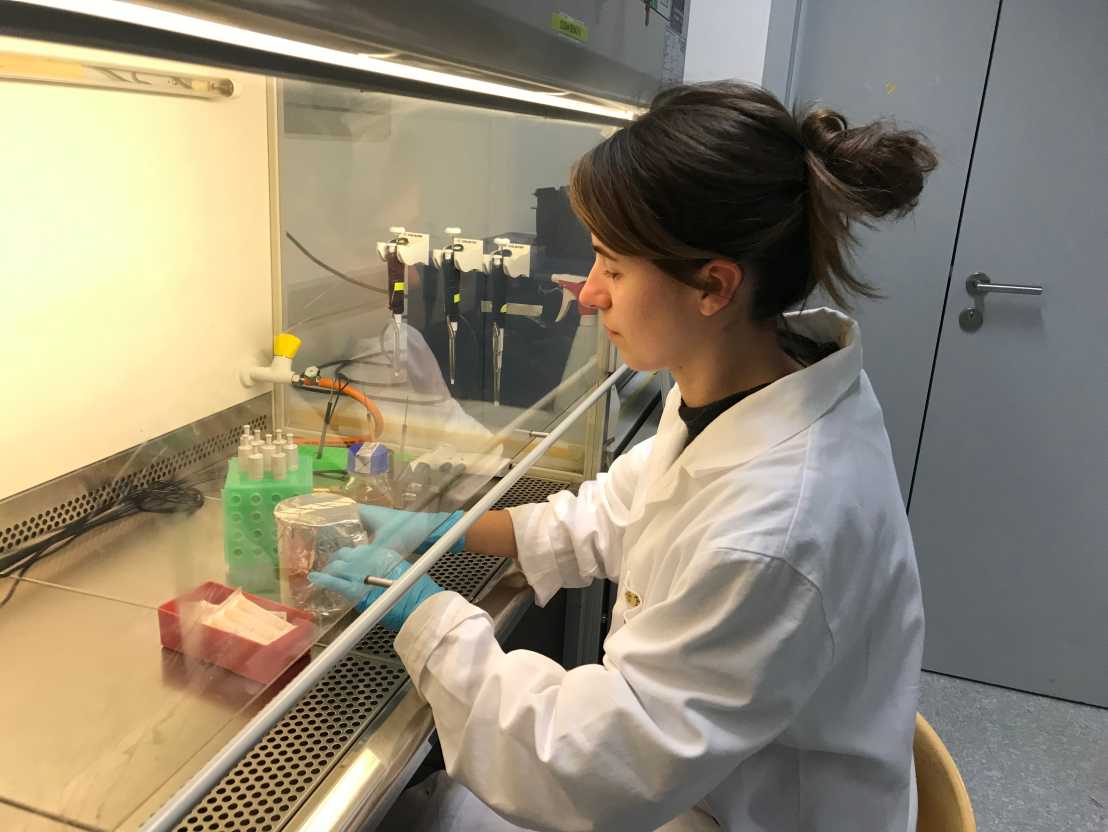
My research focuses on mycelium, the root-like structure of a fungus. I’m interested in its mechanical and optical properties at the microscale. While my approach predominantly stems from materials science, it’s also very multidisciplinary. This is why, right from the beginning, my group leader Prof. Ralph Spolenak, senior scientist Dr. Henning Galinski and I reached out to Prof. Markus Künzler from the Institute of Microbiology for insights into the biological aspects of mycelium. Markus Künzler not only was very helpful, but he also connected me to my research partner and fellow doctoral student Blanka Sokolowska. Together with her, I designed a simple setup for growing mycelium into glass capillaries. Ultimately, we want to stimulate a single mycelium filament and understand its response mechanism. At the current stage though, we are still trying to better understand mycelium and searching for the best way to grow single filaments.
My MaP moment
My wish to deepen my knowledge about the living organism mycelium led me to ALIVE (Advanced Engineering with Living Materials), a MaP project, and MaP chair Professor Spolenak’s Nanometallurgy group. All the people I’ve met at ETH Zurich have been incredibly helpful, showing me how to use lab equipment and guiding me through the process. While during my first few weeks in Zurich last summer I had felt a bit disoriented, I now move with ease in and between the labs at D-MATL, D-BIOL, and D-ARCH (where the ALIVE mycelium lab is located).
My future
I enjoy researching. For now, this is at ETH Zürich. Where I will go and what I will have accomplished in four years – it’s all still very far away. I hope to keep working with mycelium because it has so much potential. Leather made from fungi is just the start of it. Who knows what other applications will be possible if we manage to understand the various languages of mycelium!
(This article was published on 25 March 2024 on LinkedIn)
“ALIVE is very interdisciplinary and participatory”
Karen Antorveza Paez is a second-year doctoral student in Prof. Benjamin Dillenburger's Digital Building Technologies (DBT) group at D-ARCH. She is an ETH ALIVE fellow and part of the ALIVE CLiMa work stream.
My research
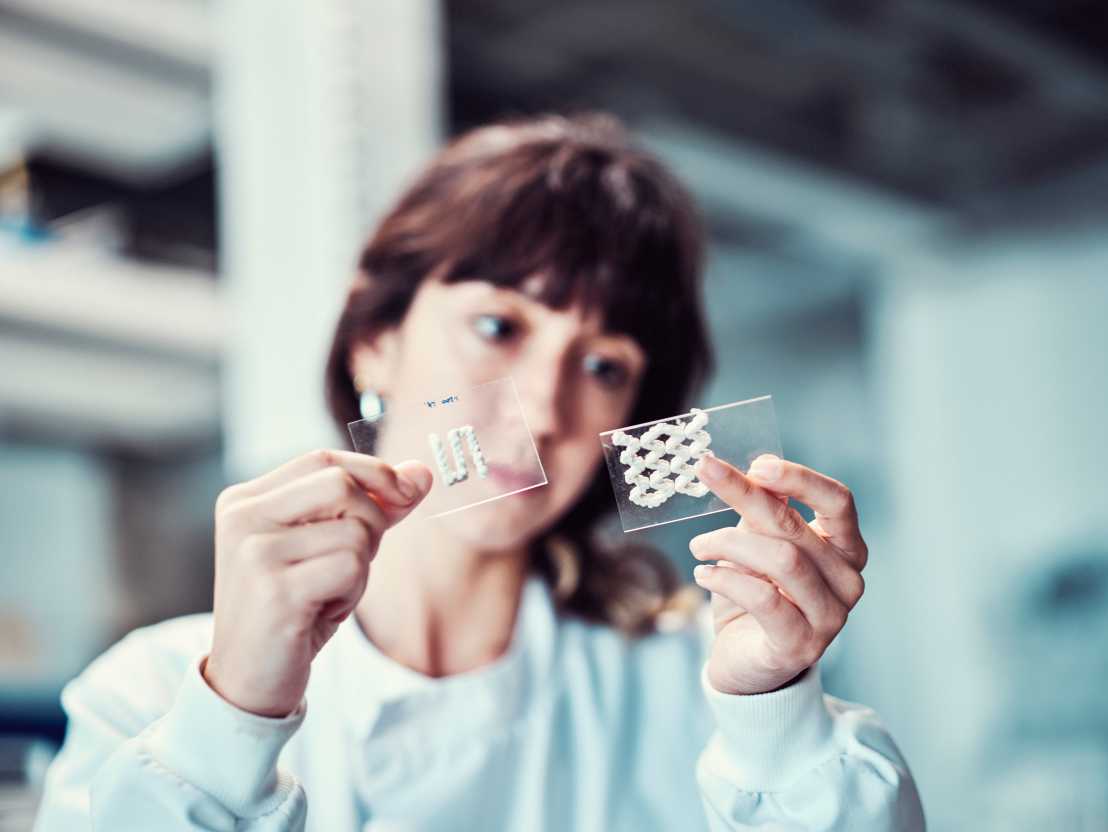
I’m working on incorporating living organisms into the built environment, using a technology called Microbially Induced Calcium Carbonate Precipitation (MICP). The resulting product is an alternative to concrete. I am investigating various design and additive manufacturing methods, also known as 3D printing, to enhance the bio-cementation process specifically for architectural applications. What makes our approach unique is that we harness bacteria to produce natural cement at room temperature. Traditional cement production requires temperatures of 1400°C. If the production works at room temperature, significant amounts of fuel can be saved, and CO2 emissions avoided. We are also investigating the use of waste by-products as raw materials, which makes the process even more sustainable.
My MaP moment
I am a MaP ALIVE doctoral fellow (ALIVE: Advanced Engineering with Living Materials). The Living Systems for Carbon Capturing in Self-Aware Infrastructure (CLiMa) group is my ETH tribe. We are about 30 people – including eight professors from various departments– and hold meetings every six months to update each other on our work. I enjoy the interdisciplinary and participatory nature of ALIVE. The direct exchange with people from fields such as materials science and microbiology is invaluable and greatly enhances my research as an architect. We even discuss the project budget and what we need to purchase for our labs. As a doctoral student, it’s not common to be involved in this kind of decision-making, so it’s a special experience.
My future
I’m in my second year of my doctorate and still exploring multiple directions in my research. Although I came for the research, I’ve discovered that I also very much enjoy teaching. For my future, I am very open to what will come. I enjoy the research environment, so I could imagine myself continuing my academic career, but more with a focus on applied research. Ultimately, what I do is more important than the setting though, hence I can also imagine myself working in the R&D department of a company.
(This article was published on 5 February 2024 on LinkedIn)
“Sustainability is at the core of our research”
Christopher H. Dreimol is a fourth-year doctoral student in Prof. Ingo Burgert’s Wood Materials Science group at D-BAUG. In his role as MaP Student Representative, he initiated the MaP Minds & Munchies event series.
My research
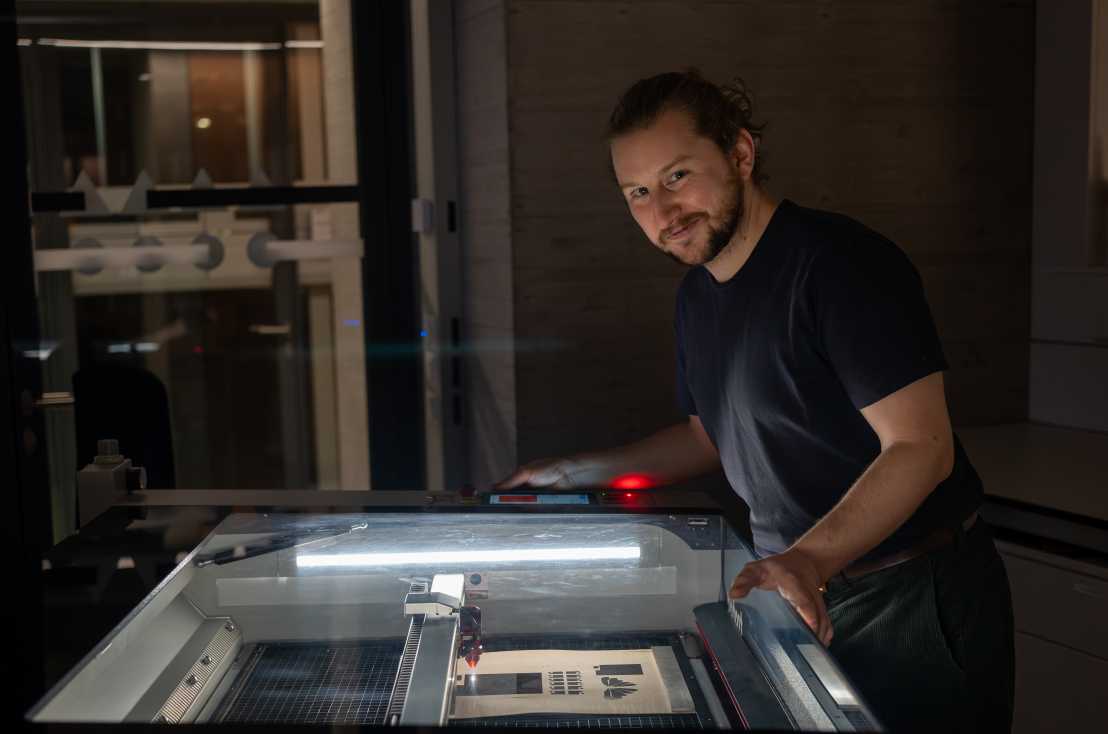
I make wood electrically conductive. To do this, I coat the wood with an aqueous bio-based coating inspired by a historic iron-gall ink, which was already used by Leonardo Da Vinci for his drawings and manuscripts. The ink-coated wood is then graphitized with a commercial CO2 laser to make the wood electrically conductive. The small amounts of iron ions used in the ink help us to catalyze the laser-induced graphitization process, making it more efficient. This is why we call the process Iron-Catalyzed Laser-Induced Graphitization (IC-LIG). It is a very simple process that we are now trying to scale up. However, it took a lot of perseverance and creativity to develop such an approach, because from the beginning we have restricted ourselves to sustainable processes and materials.
So far we have worked with wood and paper, but we are now also experimenting with (sustainable) synthetic materials. The conductive materials we produce can later be used for sensors (e.g. for measuring strain, temperature, or humidity), interactive surfaces such as touch buttons, and to build energy harvesting and storage devices. Our research is very application-oriented, but this requires a fundamental understanding of the basic principles from a process and material development perspective.
My MaP moment
As MaP student representative, I initiated an event format in collaboration with the MaP Executive Office: MaP Minds & Munchies. The idea behind Minds & Munchies is to bring graduate students together in an informal setting over lunch while two graduate students present their research, difficulties, ideas, or a personal scientific perspective. We aim to create an atmosphere where everyone feels safe and confident to ask questions and share their opinions. We had a successful start in the fall, but I hope that more students will join us for the next sessions. This kind of exchange strengthens our interdisciplinary research and personal connections - and most importantly, it's about having fun and a good time together!
My future
In a few months, I will finish my doctoral studies. However, my focus is already on a new project that has been approved by the SNSF. As a postdoctoral fellow, I will be working on extending the use of the CO2 laser to allow for other functionalization treatments of the wood surface. What comes after that is written in the stars.
I am a trained industrial mechanic (Polymechaniker), which is very useful as I now speak both "languages" the scientific and the industrial. Therefore, I can imagine working at the interface between science and industry, maybe even starting my own company. I'm also open to the academic career path, but getting a faculty position/professorship requires a lot of luck. We shall see!
More on Christopher’s research: external page https://www.nature.com/articles/s41467-022-31283-7
MaP Minds & Munchies: https://doctoral-school.ethz.ch/events/map-minds-munchies
(This article was published on 15 January 2024 on LinkedIn)
2023
"Giving a talk at the symposium boosted my confidence"
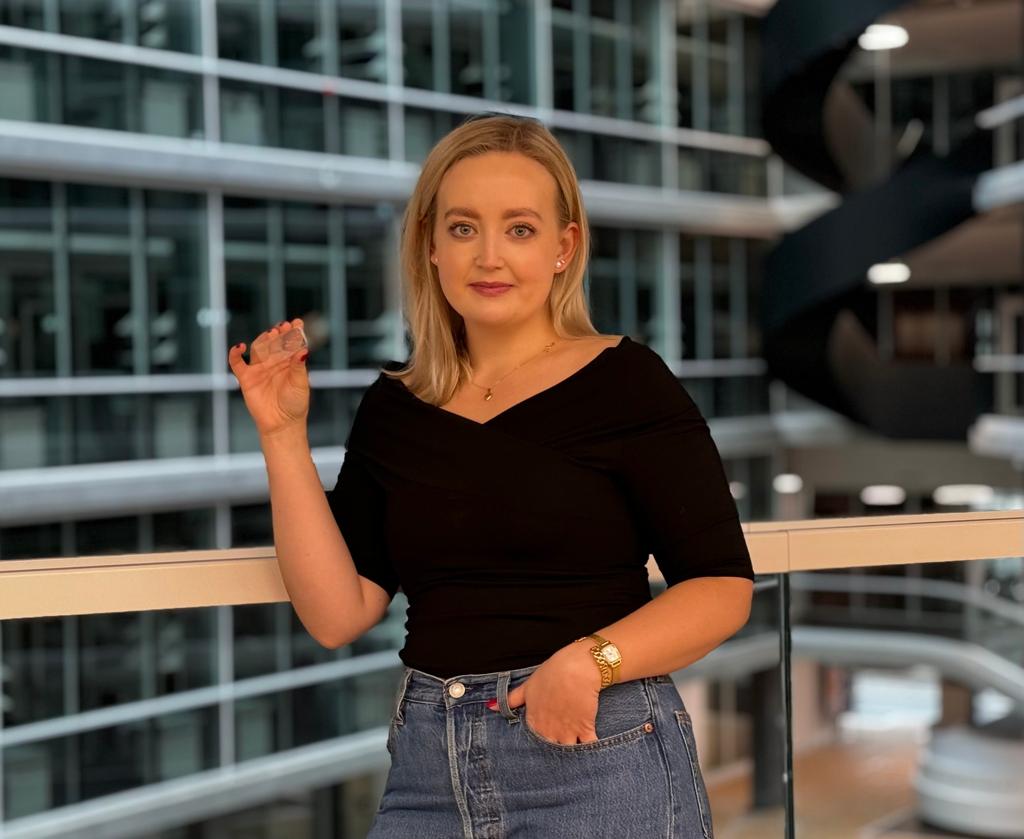
Sara Svanberg (Bioanalytics, D-BSSE, ETHZ in Basel) studies in the ‘Science and Technology of the Small’ track of MaP Doctoral School. She was part of the Graduate Symposium 2023 Organising Committee.
My research
The Bioanalytics group under Prof. Petra Dittrich is very interdisciplinary. I’m working with organ-on-a-chip (OOC) technology, where I combine microsystems engineering and biology. I focus on gingiva, a tissue in the mouth that is often inflamed, which is caused by bacterial infections. I’m trying to understand how healthy tissue compares to diseased tissue and how we can reverse the effects of the infection. The benefits of OOC lie in the fact that we directly work with human cells and on a very small scale. This is not only more ethical, but also more efficient than working with cells from mice or directly with animals, for example. Not only the pharma, but also the beauty industry is very interested in applying this research.
My MaP moment
The 2022 MaP Graduate Symposium at ETH Hönggerberg was my first conference at ETH. I was invited to give a talk – a very good experience that helped me a lot for other conferences. The exchange with the community during the symposium boosted my confidence and made me more successful in my interactions with other scientists. Because I felt thankful for the opportunity, I wanted to give back to the MaP community. That’s why I decided to volunteer for the organising committee of the MaP Graduate Symposium a year later.
My future
Very soon, my group will move into the new facilities right next to Biozentrum (The Center for Molecular Life Sciences) and the university hospital. We are all excited about it! I have about one-and-a-half to two years left of my doctoral studies. Afterwards, I want to continue my research. There is so much more to do in Life Sciences. Whether that will be in academia or in an industry setting is still an open question. Basel is my hometown now. I’d like to take advantage of the opportunities the place has to offer.
(This article was published on 14 November 2023 on LinkedIn)
"The MaP Graduate Symposium? I loved it!"
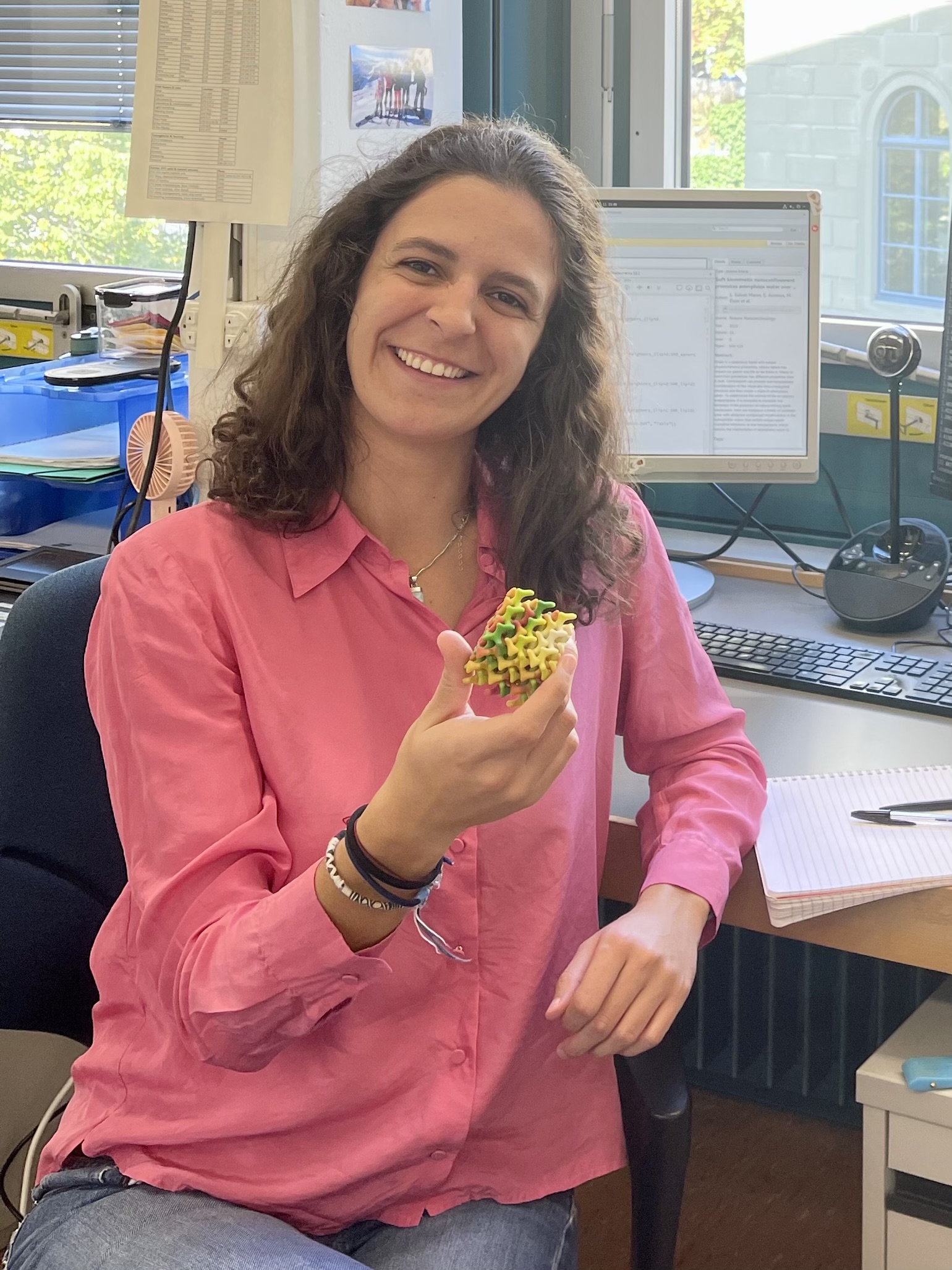
Eva Zunzunegui-Bru, a doctoral student in Prof. Dr. Raffaele Mezzenga's group (Food and Soft Materials, D-HEST), studies in the Soft Materials track of the MaP Doctoral School. She was part of the Graduate Symposium 2022 Organising Committee.
My research
Continuously asking questions about the world that surrounds us is what guides me as a physicist. In my doctorate, I study the properties of nano-confined water inside lipid mesophases. With molecular dynamics simulations, we are able to determine the atomistic description of these lipid-water-systems for the first time. The fundamental study of these systems can help in understanding their applications in biomedical, pharmaceutical and materials sciences. I think it is very special to have the opportunity to be in a group together with experimentalists. Thus, I am able to see my work not only numerically but also in the real world. I am passionate about science and am excited to further develop my expertise through this doctorate.
My MaP moment
Signing up for the organising committee for the MaP Graduate Symposium 2022 during my first year at ETH was the best decision I could have made. I got to know other doctoral students from different departments, brainstormed ideas with them, and saw the work behind a symposium with about 200 participants. The day of the symposium itself was an absolute highlight. To experience the interdisciplinary, collaborative atmosphere and to see new research, to talk to people – it was so special. I loved it because I felt part of it!
My future
After a Master’s in Spain and doctoral studies here at ETH I’ll probably do a postdoc outside of Europe. I am eager to explore other working environments and to learn as much as I can from them. My dream would be to become a professor one day. Along the way I hope to continue with my professional and personal growth in the collaborative and interdisciplinary environment that science in my field offers.
Website MaP Graduate Symposium: https://doctoral-school.ethz.ch/events/grad-symp
(This article was published on 23 October 2023 on LinkedIn)
"I study the mangetic and thermal properties of metallic glasses."

Alexander Firlus is fourth-year doctoral student in Prof. Dr. Jörg F. Löffler’s group (Laboratory of Metal Physics and Technology, LMPT). He belongs to the Material Strength & Durability Track at MaP Doctoral School.
My research
In the Metal Physics group we work on various metals and alloys such as metallic glasses, biodegradable implants, magnetic alloys, and modern aspects of metallurgy. My research is in the field of metallic glasses. Metallic glasses are amorphous (non-crystalline) materials. They do not exist in nature and are produced by melting a metal and then cooling it very quickly. I study their magnetic and thermal properties.
The research at LMPT starts at the fundamental level but several research directions have potential applications in mind. We want to understand the properties of a metal or alloy and, based on this, optimize these properties with a specific use in mind. An example are aluminum alloys for the automotive industry. Aluminum is lightweight and through proper heat treatment can acquire improved mechanical properties. The lighter a car is, the less gas it uses. Another example are biodegradable magnesium alloys for temporary medical implants. The metallic glasses I am working with have great mechanical and magnetic properties.
Equipment demo: Plasma Arc Melting
Alexander melts several pieces of Vit105 (a glass-forming alloy) in a plasma arc furnace, applying up to 3500°C of temperature and then cooling it down within a tiny fraction of a second. This way, the disordered atomic structure of the liquid is frozen-in and makes the material harder than it was before melting. The next step in this experimental process would be to examine and describe the new properties of the alloy.
This content was first published on LinkedIn on 05.10.2023.
“I am excited to see where the journey of discovery will lead me.”

Pius M. Theiler is a doctoral student at Department of Mechanical and Process Engineering (D-MAVT), ETH Zurich, Nanotechnology Group. He is affiliated with the 'Science and Technology of the Small' track of MaP Doctoral School.
My research
My research revolves around the chirality-induced spin selective (CISS) effect. This quantum mechanical effect can be seen in electrons in molecules or in crystals without mirror symmetries (=chiral). The CISS effect may play a central role in the origin of life, in chemistry, and in spintronic applications.
The CISS effect manifests itself in an inexplicably large shift of the charge distribution in the chiral molecule, which differs in each case from the one its mirror-image version displays. My team and I have developed a new measurement method that can detect these charge differences. The results of our measurements allow us to conclude that the mirror symmetries are broken in space or time and thus to rule out long-standing attempts at explanation of the CISS effect. Scientists will need to build theories on different foundations than where they have done research before. I am excited to see where the journey of discovery will lead me.
My MaP moment
Thanks to MaP Doctoral School I got in contact with people from other groups at ETH. Some of them worked in a similar research field but in a different domain, which meant they had approaches and terminologies different from mine. Communicating my research and seeing how they reacted to it opened entirely fresh perspectives on problems I faced. The Storytelling Workshop helped me a lot. I learned that it's not only what I say that matters, but also how and why I say it. To make sure others understand, my presentation needs to be neat and catchy and, most importantly, adapted to their (scientific) background.
My future
I dream of an academic career. I like to get to the bottom of things to find out what keeps this world together. Plus, I love to teach. As a group leader, I would advocate a collaborative environment. Making sure everyone feels mentally safe and valued as an individual is very important to me. Also, it’s a precondition to achieving a team’s full potential. But first things first: I expect to defend my thesis this December.
(This article was published on 25 September 2023 on LinkedIn)